
Why You Should Only Hire a Licensed Contractor to Install Hurricane Protection in Florida
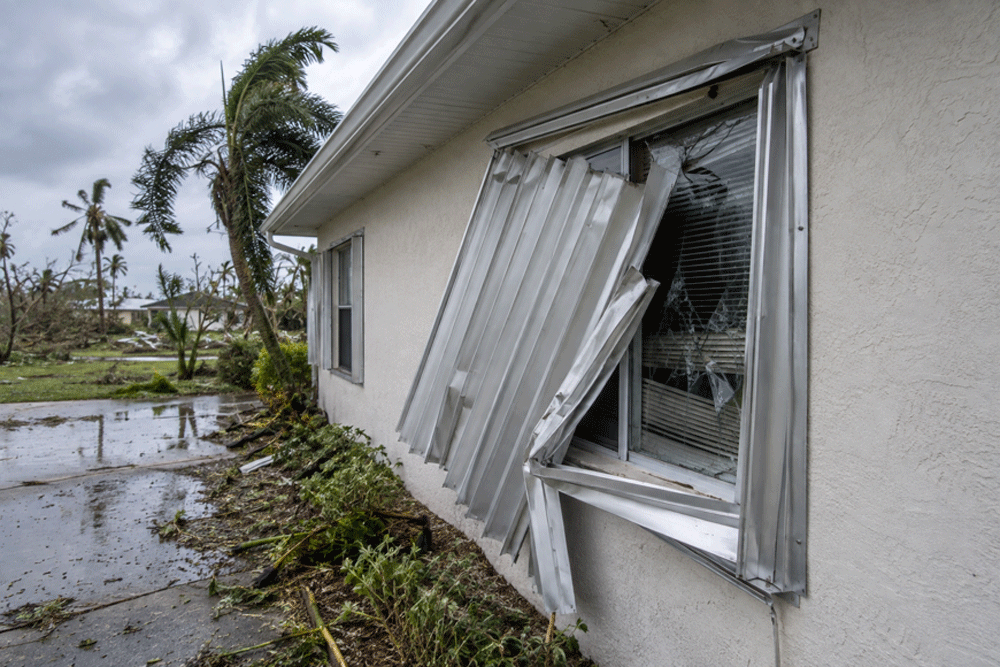
When a hurricane approaches, your shutters, impact windows, storm panels, or motorized hurricane screens become part of your home’s defense system. They are expected to withstand extreme wind pressure and flying debris while protecting the openings that help keep your home structurally intact.
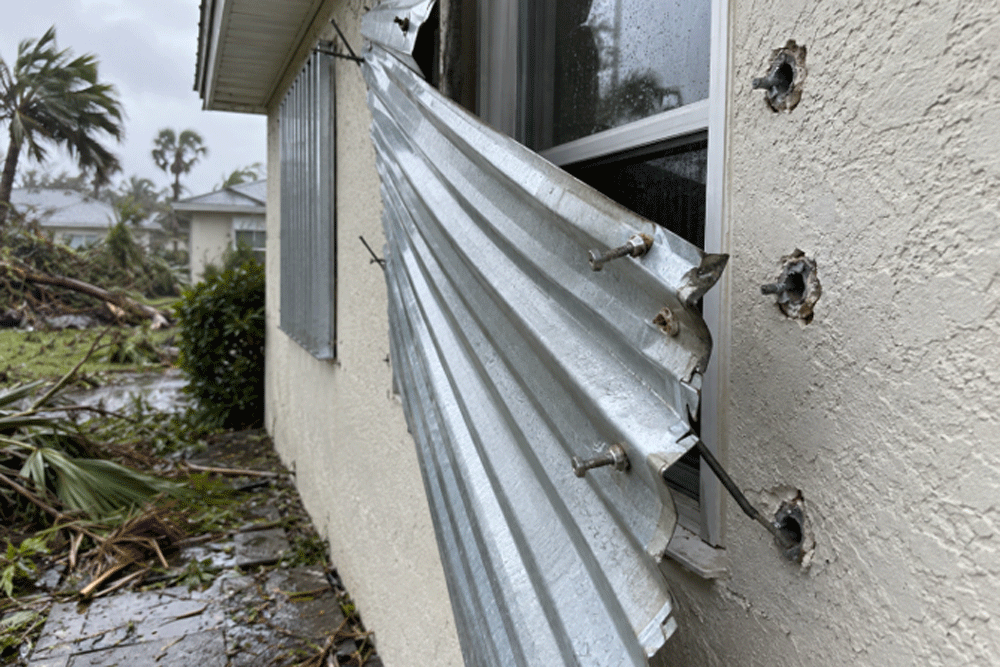
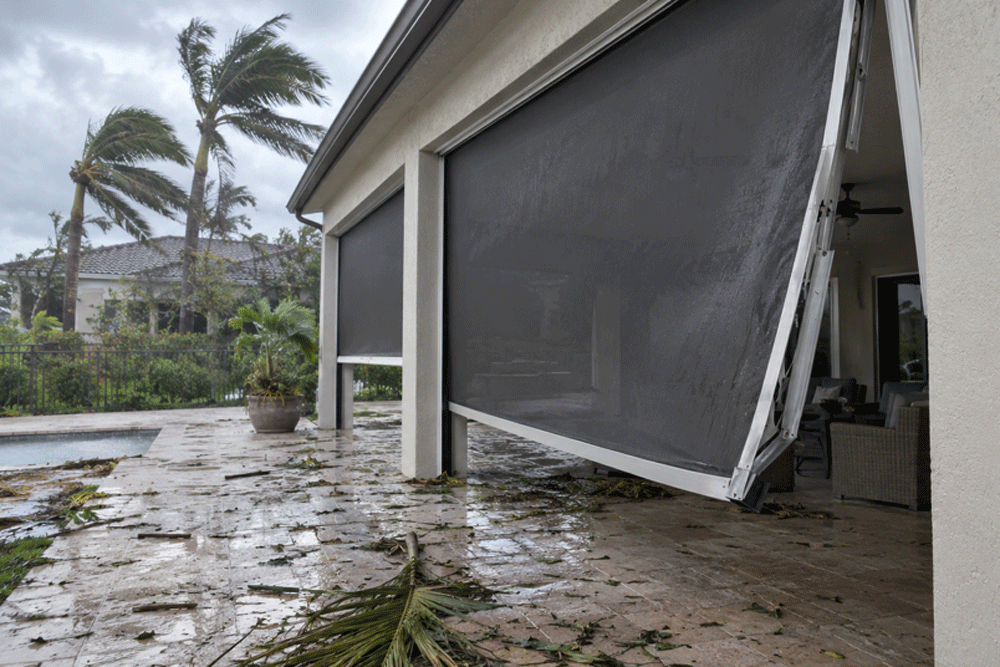
That protection depends on more than the product itself. It depends on correct measurements, approved components, proper attachment methods, adequate fastener embedment, accurate spacing, and installation that follows the product’s engineering documents.
Saving money by hiring an unlicensed installer can leave you with hurricane protection that looks secure but fails when you need it most.
Hurricane Protection Is an Engineered System
Florida-approved hurricane protection products are tested and approved for specific applications. Their approval documents may specify:
- Maximum opening sizes
- Allowable design pressures
- Required fastener types
- Fastener spacing and embedment
- Approved mounting surfaces
- Edge-distance requirements
- Required separation from glass
- Restrictions within High-Velocity Hurricane Zones
- Exact installation details
Changing the fasteners, spacing, tracks, anchors, mounting surface, or installation method can invalidate the product’s approved configuration.
A licensed contractor should understand how to determine the required wind pressures for your property, select an appropriate approved product, obtain the necessary permit, and install the system according to its engineering and manufacturer instructions.
The Florida Building Commission maintains the state’s Florida Product Approval database, where homeowners can verify whether many hurricane-protection products have current approval.
A Business License Is Not a Contractor’s License
Homeowners should not assume someone is qualified simply because the person has a company, an LLC, a business tax receipt, a professional-looking truck, or experience working for another installer.
Florida’s Department of Business and Professional Regulation specifically warns that:
- A business tax receipt does not qualify someone to act as a contractor.
- Registering a corporation or LLC does not create a contractor’s license.
- Contractors should provide a valid license number that can be verified.
- Homeowners should confirm that the license covers the type of work being performed.
Florida law also prohibits an unlicensed person from using another contractor’s license number. A contractor cannot simply “lend” a license to an unlicensed installer who is operating a separate business.
Before signing a contract, verify both the individual license and the business being used for the project through the Florida DBPR license search.
What Can Happen When an Unlicensed Person Performs the Work?
Under Section 489.127 of the Florida Statutes, acting as a contractor without the required license is generally a first-degree misdemeanor. A repeat violation can become a third-degree felony.
Unlicensed contracting performed during a state of emergency declared by the governor can also be prosecuted as a third-degree felony. This is particularly important after a hurricane, when unlicensed operators frequently enter damaged communities and offer quick repairs or installations.
The consequences for the unlicensed installer may include:
- A stop-work order
- Civil citations and fines
- Criminal charges
- Daily penalties for continuing violations
- Court or administrative proceedings
- Liens resulting from unpaid enforcement penalties
For the homeowner, the consequences can include an unfinished project, lost deposits, defective workmanship, additional repair expenses, and difficulty holding the installer accountable.
The Florida DBPR reports receiving complaints involving unlicensed contractors who performed substandard work, abandoned projects, or accepted payment without completing the job. Its consumer guidance is straightforward: protect your investment by hiring a properly licensed contractor.
What Will the City or County Do If It Discovers Unpermitted Work?
The exact process varies by jurisdiction, but homeowners should not assume the building department will overlook the installation.
If hurricane protection was installed without a required permit, the city or county may:
- Issue a stop-work order or notice of violation.
- Require an after-the-fact permit.
- Request product approvals, engineering documents, design pressures, and installation details.
- Require portions of the installation to be exposed so an inspector can verify the anchors and attachment method.
- Require corrections or complete removal if the work cannot be verified or does not meet code.
- Assess investigation fees, permit penalties, reinspection charges, or code-enforcement fines.
- Refer suspected unlicensed contracting to local enforcement authorities or the DBPR.
Florida law permits local jurisdictions to issue citations and enforce their ordinances against unlicensed contractors. Continuing violations may generate additional daily penalties.
An after-the-fact permit is not a guarantee that the work will be approved. If the installer used the wrong anchors, mounted the system to an unsuitable surface, exceeded the product’s allowable size or pressure, or failed to follow the approved engineering, parts—or all—of the installation may need to be replaced.
The homeowner can ultimately be left paying twice: once for the original installation and again to bring the property into compliance.
How Can Unlicensed or Unpermitted Work Affect Homeowners Insurance?
Hiring an unlicensed person does not automatically mean every future insurance claim will be denied. Coverage depends on the language of the policy, the cause of the loss, the condition of the property, and the facts surrounding the claim.
However, an unlicensed or unpermitted installation can create serious insurance complications.
- The Carrier May Question Whether the Protection Was Properly Installed
After a storm, an insurance adjuster may investigate why a shutter, screen, window, door, or attachment failed. If the installation did not follow the approved engineering, the insurance company may determine that defective workmanship or improper installation contributed to the damage.
Most property policies contain limitations or exclusions relating to faulty, inadequate, or defective construction, installation, maintenance, or workmanship. The precise effect depends on the individual policy and how the damage occurred.
- You May Have Difficulty Proving Code Compliance
A permit and final inspection create an official record that the installation was reviewed by the local building department. Without that record, the homeowner may have difficulty proving:
- What product was installed
- Whether the product was approved
- Who installed it
- Whether the installer was properly licensed
- Whether the installation followed the approved plans
- Whether the work passed inspection
Photographs, contracts, invoices, permits, product-approval documents, and final inspection records can all become important following a loss.
- You Could Lose or Fail to Qualify for Wind-Mitigation Credits
Insurance companies may require documentation before granting discounts for hurricane-protection features. Citizens Property Insurance advises homeowners to retain documents such as invoices, product specifications, permits, work orders, and product approval or Notice of Acceptance information. Citizens also states that mitigation documentation is reviewed by its underwriters and may be independently verified. Citizens explains its wind-inspection documentation requirements here.
If the protection cannot be documented or verified, the homeowner may not receive the expected wind-mitigation credit.
- The Work Could Create Renewal or Underwriting Problems
Unpermitted alterations may be discovered during an insurance inspection, wind-mitigation inspection, four-point inspection, property sale, or policy renewal. A carrier may request proof of permitting or require the condition to be corrected before providing or continuing coverage.
Requirements vary among insurance companies, so homeowners should consult their insurance agent or carrier about their specific policy.
- The Installer May Not Have Liability or Workers’ Compensation Coverage
A properly licensed contracting business is generally expected to maintain the insurance or exemptions required for its operations. An unlicensed installer may have no general liability coverage and no workers’ compensation protection.
If the installer damages your home or someone is injured on the property, recovering the loss may be difficult. The homeowner could face expenses or legal disputes that would normally be handled through the contractor’s insurance.
Warning Signs of an Unlicensed Contractor
Be cautious if someone:
- Refuses to provide a contractor’s license number
- Provides a license belonging to a different person or company
- Says a permit is unnecessary without confirming that with the building department
- Asks you to obtain an owner-builder permit while the person performs the work for compensation
- Wants the check made payable to an individual instead of the contracted business
- Demands a large cash payment before materials are delivered
- Cannot provide liability or workers’ compensation documentation
- Will not give you product approvals or engineering documents
- Advertises an approved product but does not explain whether the proposed installation follows that approval
- Offers a price dramatically lower than established licensed contractors
What Homeowners Should Request Before Work Begins
Before hiring anyone to install hurricane protection, ask for:
- The contractor’s complete license number
- The exact legal name of the licensed contracting business
- Proof of general liability and workers’ compensation coverage or exemption
- A written contract describing the product and installation
- The Florida Product Approval or Miami-Dade Notice of Acceptance, when applicable
- Confirmation of who will obtain the permit
- Confirmation that required inspections will be scheduled
- Manufacturer warranties and contractor workmanship warranties
- A copy of the closed permit and final inspection after completion
Verify the contractor’s license independently. Do not rely solely on a number printed on a proposal, business card, truck, or website.
The Lowest Price Can Become the Most Expensive Choice
Hurricane protection is not decorative work. It is a structural safety system intended to protect your family, your home, and everything inside it.
An unlicensed installer may offer a lower price by avoiding permits, insurance, engineering requirements, inspections, and accountability. Those apparent savings can disappear quickly if the city issues a violation, the installation must be removed, a wind-mitigation credit is rejected, or the protection fails during a hurricane.
Choose a properly licensed and insured contractor who uses approved products, obtains required permits, follows the product engineering, and completes the required inspections.
When the next hurricane comes, you should not have to wonder whether your protection was installed correctly.