
The Moiré Effect: Why Wavy Patterns Appear Between Hurricane Screens and Pool Enclosures
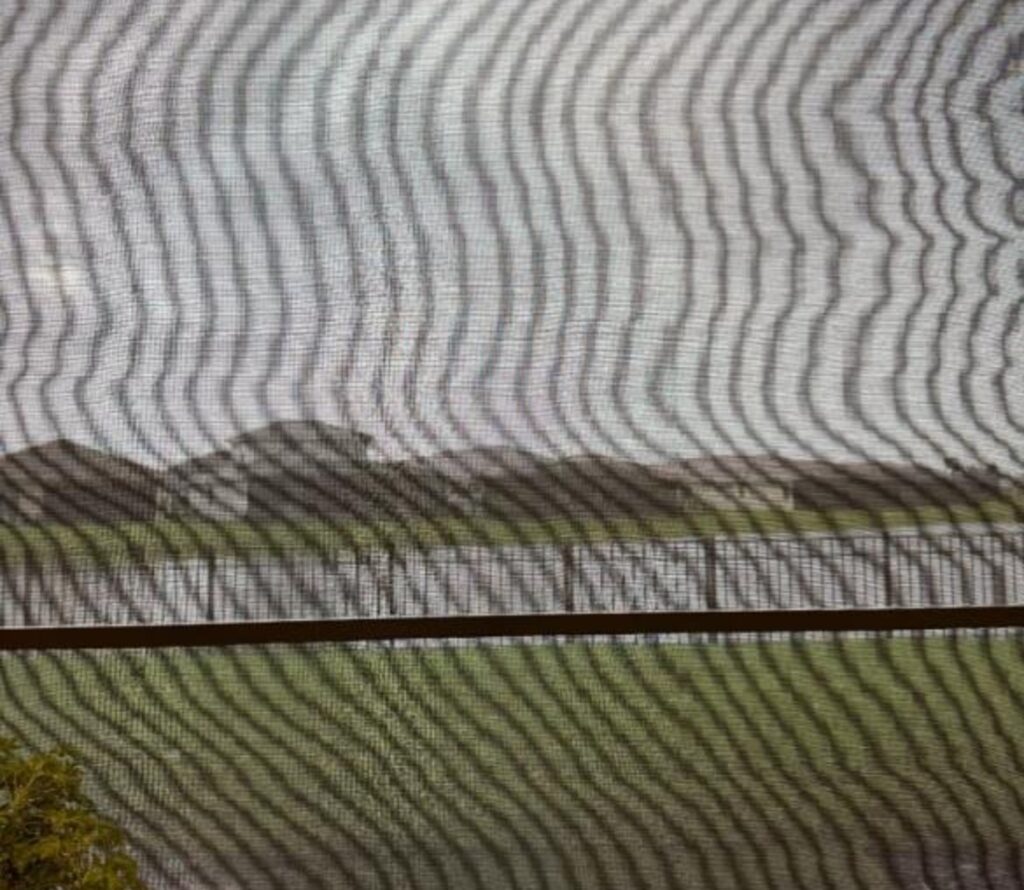
Quick SummaryThis article explains the moiré effect, the optical illusion that creates wavy or shimmering patterns when a hurricane screen overlaps visually with a pool cage, lanai enclosure, or another mesh screen nearby. It covers why the pattern happens, why it often looks worse in photos, and why there’s no way to predict or prevent it before installation. It also confirms that this visual distortion has zero effect on a hurricane screen’s strength or storm performance. |
Homeowners occasionally reach out after noticing strange wavy, rippling, or shimmering patterns when looking through their hurricane screen toward a pool cage or lanai enclosure. It can look like something is wrong with the screen, especially the first time someone spots it.
In most cases, what they’re seeing is a well-documented optical phenomenon known as the moiré effect, sometimes called a hurricane screen optical illusion, and it has nothing to do with a defect or a bad installation. At Sun and Storm Systems, this comes up often enough that it’s worth explaining clearly, since a quick look usually puts the worry to rest fast.
What Is the Moiré Effect?
The moiré effect shows up when two repeating patterns overlap. When the small openings in one mesh line up with the openings in another mesh nearby, like a hurricane screen sitting close to a solar screen, insect screen, or pool cage, the eye can pick up larger patterns that don’t actually exist on either screen. Near a pool enclosure specifically, this is often described as a pool cage moiré effect.
These patterns often show up as:
- Waves
- Ripples
- Zig-zag lines
- Shimmering
- Distorted bands
- Patterns that seem to shift or move
A simple way to picture it: lay two sheets of graph paper on top of each other and rotate one slightly. Larger patterns appear out of nowhere, even though neither sheet was printed with those designs. The same thing happens with hurricane screens, pool cage mesh, window screens, fencing, fabric, and even digital photos.
Why Hurricane Screens and Pool Cages Interfere Visually
Modern motorized hurricane screens are built with tight, consistent mesh patterns. Pool cages and lanai enclosures use their own repeating mesh as well. When someone looks through one screen toward the other, those two patterns interact visually, and depending on the angle and the light, the eye can register hurricane screen and pool cage interference that reads as waves or distortion.
This tends to show up most when:
- A hurricane screen sits in front of a pool cage
- Two screened structures are close together
- The viewer is standing farther back
- Sunlight is strong
- The viewing angle shifts even slightly
None of this means anything is functioning incorrectly. Both screens are doing exactly what they’re built to do. What’s changing is only the way the eye reads the overlap.
Why the Pattern Seems to Move
A lot of homeowners notice that the wavy pattern shifts as they walk across the lanai or patio. That’s normal too. A small change in viewing angle changes the relationship between the two mesh patterns, so this screen mesh visual distortion shifts right along with it.
That’s why the effect can look strong from one spot and barely show up a few feet away, and why it can seem more obvious at certain times of day as the sun’s angle changes.
Why Photos Make It Look Worse
One of the most common situations: someone snaps a photo of their screen, and the wavy pattern looks far more dramatic in the picture than it did standing there in person. That happens because a camera sensor adds its own repeating grid of pixels into the mix.
When that grid overlaps with the screen mesh, it creates an added layer of visual distortion on top of what the eye alone would see. A screen that looks completely normal in person can show noticeable ripples in a photo, and that’s a quirk of digital imaging, not a problem with the screen.
Can It Be Predicted Before Installation?
Not really, and that’s the most common follow-up question. There’s no reliable way to know ahead of time exactly when the moiré effect will show up, where it’ll be most visible, or how strong it’ll look on a given home. Too many variables are involved, including:
- Mesh size on each screen
- Screen orientation
- Distance between the two structures
- Time of day and sunlight
- Viewing angle and observer location
- Background colors
- Camera equipment used to photograph it
Two neighboring homes with nearly identical hurricane screen setups, even ones also fitted with accordion shutters on other openings, can have completely different experiences. One owner might notice the pattern occasionally, and the other might never see it at all. No installer, engineer, or manufacturer can guarantee it won’t appear, or predict exactly when it will.
Does It Affect Hurricane Protection?
No, not in any way. The moiré effect is purely a visual experience, nothing more. It has zero impact on:
- Wind resistance
- Storm and hurricane protection
- Impact resistance
- Structural performance
- Insect protection
- Solar protection
- Product lifespan
A screen showing this pattern performs exactly the way it was designed and tested to perform. Homeowners who’d rather avoid the visual overlap on a specific opening sometimes choose a solid option like roll-down shutters instead, since a solid panel doesn’t interact with mesh the way another screen does.
What This Means for Your Home
The moiré effect is a normal, well-understood visual interaction that shows up whenever two mesh or screen patterns are viewed together. It’s most commonly noticed when a hurricane screen sits near a pool cage, lanai enclosure, insect screen, or another mesh product nearby. The wavy or shimmering pattern can look surprising, but it doesn’t point to a defect and doesn’t change how well the screen performs.
Because so many shifting factors are involved, from lighting to viewing angle to camera equipment, there’s no way to guarantee it won’t show up on a given home. For homeowners who’d rather sidestep the visual entirely on certain openings, a solid option such as Bahama-style shutters can be worth considering alongside a screen system.
Protect Your Home with Hurricane Screens Built by Sun and Storm Systems
Sun and Storm Systems installs motorized hurricane screens, roll-down and accordion shutters, Bahama and colonial shutters, Lexan panels, and solar screens for homeowners across Sarasota, Manatee, Lee, Charlotte, Hillsborough, Pinellas, and Pasco counties. As a family-owned, Florida-licensed company, we send our own trained, insured installers to every job, never subcontracted crews, so the work on your pool cage, lanai, or patio opening gets handled right the first time.
From questions about a moiré pattern to comparing mesh screens against solid shutters to planning a full hurricane protection project for your home, our team can walk through the options and put together a straightforward plan that fits your budget. Request a free quote or call our Sarasota showroom at 941-900-8924 to get started.
Frequently Asked Questions
What is the moiré effect and why does it happen with hurricane screens?
The moiré effect is an optical interaction that happens when two repeating patterns, like the mesh on a hurricane screen and the mesh on a nearby pool cage or lanai enclosure, overlap in your field of view. Your eye picks up on the way the two grids line up and picks out larger wavy, rippling, or shimmering shapes that don’t actually exist on either screen by itself. It’s the same idea as stacking two pieces of graph paper and rotating one slightly. Hurricane screens are built with tight, uniform mesh, which actually makes this kind of visual interaction more likely to happen when another screened structure sits nearby, not less.
Does the moiré effect mean my hurricane screen was installed wrong?
No, it doesn’t. The moiré effect isn’t a manufacturing defect, an installation mistake, a material flaw, or any sign of damage to the screen. It’s simply what happens when two mesh patterns interact visually from a certain distance and angle, and it has no connection to how the screen was measured, cut, or mounted. In fact, seeing this pattern is often a sign that the mesh on both screens is unusually consistent and well made, since less uniform mesh tends to blend interference patterns rather than produce a clear one. The strength, wind resistance, and overall performance of the hurricane screen stay exactly the same, visible pattern or not.
Can the moiré effect be predicted or prevented before installation?
Not with any real accuracy. Too many variables affect when and where the moiré effect shows up, including mesh size, screen orientation, distance between the two structures, sunlight, time of day, viewing angle, background colors, and even the camera used to photograph it. Two homes with nearly identical hurricane screen and pool cage setups can have completely different experiences. One owner might notice the wavy pattern occasionally, and the other rarely sees it at all, and the same homeowner might notice it one afternoon and not the next. Because so many shifting conditions are involved at once, no installer, engineer, or manufacturer can guarantee in advance that it will or won’t appear on a specific home.