
 Hurricane shutters are a significant home improvement, so it makes sense to understand what affects the price before you commit. Roll down shutters vs accordion hurricane shutters can differ in product cost, installation needs, and operation. Accordion shutters often have a lower upfront price, while roll-down systems may cost more, particularly when motorization or electrical work is involved. But the lowest estimate may not cover every opening or include permits and installation details. We’ll explain the main cost factors and share practical questions to ask contractors, helping you compare complete quotes and find an option that works for your budget.
Key Takeaways
- Match the shutter style to your home and routine: Consider how easy each system is to reach, operate, and store when open.
- Confirm protection and installation requirements: Check product ratings, approvals, opening coverage, permits, and any electrical work.
- Compare total costs and ongoing care: Request itemized quotes, ask about maintenance and backup operation, and check with your insurer about possible discounts.
How Do Roll-Down and Accordion Shutters Work?
Roll-down and accordion shutters cover windows, doors, and other openings when you need storm protection. Both stay attached to your home, so you don’t have to carry separate panels out of storage before a storm. Their main difference is how they move: roll-down shutters travel vertically from a housing above the opening, while accordion shutters slide sideways from panels stored beside it.
That difference affects how the shutters look when open, how much effort it takes to close them, and what space they need around each opening. Roll-down shutters leave the sides of a window clear but require room above it for the housing. Accordion shutters need space beside the opening for their folded panels and tracks.
Think about how many windows and doors you’ll need to secure, who will operate the shutters, and whether each opening is easy to reach. If you have upper-floor windows or limited mobility, ask your installer to demonstrate the operation before you choose a system. Also confirm how the shutters lock and what you’ll need to do if the power goes out. These details can help you select a setup that suits your home and the way you use it.
How Roll-Down Shutters Open and Store
Roll-down shutters sit in a housing above a window or door. To close one, you lower the shutter through vertical tracks until it covers the opening, then secure it using the product’s locking mechanism. When the shutter is open, it rolls back into the housing, keeping the window or door clear.
Depending on the model, you may operate a roll-down shutter with a hand crank or a motor. Ask your installer where the housing will be placed and whether it could affect trim, nearby fixtures, or the appearance of your home. The roll-down shutter guide explains how these shutters deploy and store.
How Accordion Shutters Fold and Lock
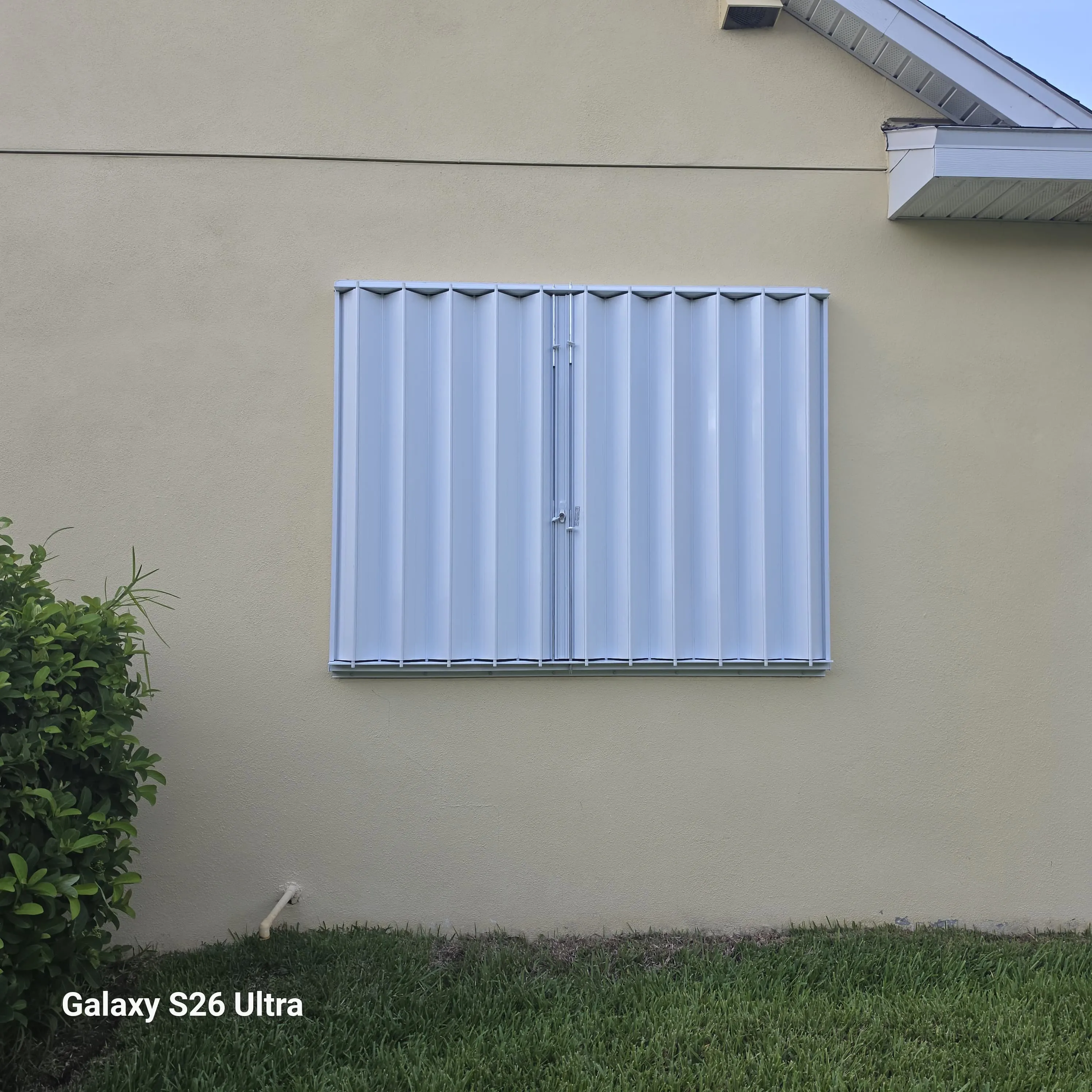
Accordion shutters are mounted beside the opening. To close them, pull the panels along their tracks until they meet across the window or door, then secure them with the locks. When they’re open, the panels fold back and stay stored at the sides.
Because accordion shutters remain attached to your home, you don’t need to retrieve and carry separate pieces before a storm. Check that you can comfortably reach the panels and locks, especially at large or elevated openings. The accordion shutter instructions describe the basic process of pulling the shutters together and locking them.
How Manual, Motorized, and Backup Options Work
Manual shutters use a crank or hand-operated mechanism. Motorized roll-down shutters typically open and close using a wall switch or remote. A motor may be convenient if you have several openings to secure or would rather not operate each shutter by hand. Ask whether installation requires electrical work and where the controls will be located.
Power arrangements vary by product. Some motorized shutters have a manual override, which lets you operate them without electricity. Check your model’s specifications and ask your installer to show you how the override works before you need it. Wind Safe Hurricane Protection explains manual overrides as one option for operating motorized shutters during a power outage.
How Do They Compare for Storm Protection and Security?
Compare Wind and Impact Ratings, Approvals, and Coverage
Roll-down and accordion shutters can both help protect windows and doors during a storm. But the shutter style alone does not determine how much protection you get. Ratings and approvals vary by product, opening size, installation method, and local building requirements. Ask for documentation that matches the exact shutters in your estimate, and confirm they meet the requirements for your home’s location.
Check which windows, doors, and other openings the quote covers. An unprotected opening may leave part of your home exposed, so ask the installer to explain any exclusions. A comparison of roll-down and accordion shutters can help you understand the general differences, but your installer should verify the ratings and approvals for the products they recommend.
Measure and Install Shutters Properly
A shutter’s performance depends on more than its product rating. Installers need to measure each opening accurately, secure the mounting brackets to a suitable structural surface, and align tracks so shutters close and lock correctly. Roll-down systems may also require electrical work. Ask whether permits or inspections apply, and request a clear explanation of what the installation includes.
Before you sign an estimate, ask who will install the shutters and whether they understand your area’s building codes and wind requirements. A qualified professional can check the mounting surfaces and explain where tracks, housings, or wiring will go. This guide to choosing a Florida shutter installer highlights the importance of local code and structural knowledge.
Understand Added Security—and Its Limits
Both shutter types create a physical barrier over windows and doors, which can be useful when you’re home or away. Some roll-down models include motorized controls, remote operation, or integrated locks. Accordion shutters usually open and close by hand and need to be locked in place. Features differ by model, so ask the installer to demonstrate how each system works before you decide.
Shutters can support your home’s security, but they do not replace other security measures or make a home impossible to enter. Consider how easily you can operate and secure them, especially on large openings or upper floors. If you have limited strength or mobility, ask about motorized options and backup operation. Your choice should suit both your storm-preparation routine and how you plan to use the shutters day to day.
What Do Roll-Down and Accordion Shutters Cost?
Compare Product, Installation, Permit, and Electrical Costs
Accordion shutters generally cost less upfront because they have a simpler design and manual operation. One published estimate lists product costs at $15 to $25 per square foot for accordion shutters and $20 to $45 per square foot for roll-down shutters. Installation may add $5 to $10 per square foot for accordion shutters and $10 to $20 per square foot for roll-down shutters, according to Storm Smart’s cost comparison.
Based on those estimates, product and installation together could range from about $20 to $35 per square foot for accordion shutters and $30 to $65 per square foot for roll-down shutters. These figures are a starting point, not a quote. Your total will depend on the number and size of openings, the mounting surface, and the system you choose. Motorized roll-down shutters may also require wiring and electrical work.
Permit rules and fees vary by location. Ask a licensed installer whether the quote includes permits, inspections, and any electrical work. Request an itemized estimate so you can compare the full cost of each system.
Consider Repairs, Maintenance, and Possible Insurance Discounts
Include routine care and potential repairs in your budget. Accordion shutters need regular cleaning and lubrication to help their panels slide smoothly. Roll-down shutters may need occasional motor servicing. Ask your installer which maintenance tasks you can handle yourself and what signs mean a shutter needs professional attention.
Either shutter type may qualify for an insurance discount if it meets applicable building-code requirements and is installed by a licensed contractor. However, discounts depend on your insurer, policy, product approvals, and installation details. RollShield’s comparison of roll-down and accordion shutters notes that both systems may qualify when they meet Florida Building Code standards and are properly installed. Check with your insurance agent before you buy, and ask what product documents or installation records they’ll need to assess eligibility.
What Happens During Installation?
Shutter installation begins with a review of your windows, doors, and the surfaces around them. The installer then plans where each panel, track, or housing will go and checks what the system needs to operate. A careful assessment helps ensure the shutters fit the openings and are practical to use when you need them.
Measure Openings and Check Mounting Surfaces
The installer measures every window and door that will receive shutters, including openings with unusual shapes or trim. They’ll inspect the surrounding surfaces to identify where brackets and fasteners can attach securely. Solid mounting points and properly aligned tracks help the shutters open and close as intended.
Mention anything that could affect installation, such as nearby plants, outdoor lighting, limited access, or features that extend from the wall. Ask the installer to explain how each opening will be covered and where the hardware will sit. Secure mounting and precise alignment are among the key installation considerations for hurricane shutters. Before work begins, confirm that the proposed product and installation meet the requirements that apply to your home.
Plan for Tracks, Housings, Wiring, and Building Requirements
Accordion shutters fold into tracks beside the opening. Roll-down shutters need a housing above the window or door, plus side tracks to guide the curtain. The installer will check that these parts fit without interfering with rooflines, trim, lighting, or other features. Roll-down shutters may operate with a crank or a motor. Motorized models may need electrical work, which should be completed according to applicable codes.
Ask who will arrange permits or inspections if they’re required, and whether electrical work is included in the project. Requirements vary by location and product, so confirm that the selected shutters have the approvals needed for your home. Before the installer leaves, ask for a demonstration of how to open, close, and secure each shutter.
Account for Upper-Floor Access and Safe Operation
Consider who will close the shutters before a storm and how they’ll reach every opening. Operating accordion shutters on upper floors may involve using a ladder, which can be challenging or unsafe. Motorized roll-down shutters can make hard-to-reach windows easier to cover, since many models operate with an indoor control. A comparison of shutter access and operation can help you weigh these practical differences.
Ask the installer to demonstrate the system and let you try the controls yourself. If you choose motorized shutters, discuss how to operate them during a power outage and whether the model includes a manual override or backup option. Make sure everyone who may use the shutters understands how to operate and secure them.
How Much Maintenance Do Shutters Need?
Roll-down and accordion shutters need regular care to operate smoothly when you need them. Keep panels and tracks clean, check locks and hardware, and address damage promptly. Follow the manufacturer’s instructions, since care can vary by shutter model and material. A seasonal check gives you time to arrange repairs before a storm is approaching.
Clean and Inspect Panels, Tracks, and Locks
Dirt, leaves, and other debris can build up in tracks and make shutters harder to open or close. Clear the tracks and the area around each opening, then clean the panels as the manufacturer recommends. Accordion shutters should slide smoothly and lock securely. Roll-down shutters also need clear tracks and unobstructed space around the opening.
Check that locks engage fully, and don’t force a panel that catches or feels unusually heavy. If lubrication is recommended, use a product approved for your shutter. The care guidance for roll-down and accordion shutters explains why clean tracks and suitable lubrication help shutters operate properly. Have bent tracks or faulty locks repaired before storm season.
Care for Motors and Hardware in Coastal Conditions
If you have motorized roll-down shutters, test the controls periodically and pay attention to changes in the motor’s sound or movement. Stop using a shutter if it stalls, moves unevenly, or makes an unusual noise. A qualified professional can inspect the motor and determine whether it needs service. Avoid opening motor housings or attempting electrical repairs yourself.
Salt air and moisture can wear on exposed hardware. Check visible brackets and fasteners for corrosion or looseness, and follow the manufacturer’s care instructions for cleaning. Secure mounting, aligned tracks, and code-compliant electrical work all contribute to reliable operation. The shutter installation and maintenance overview offers more detail on when professional service may be needed. Ask a qualified installer to assess loose brackets or damaged wiring.
Check for Wear, Repairs, and Seasonal Readiness
Before storm season, open and close each shutter in calm weather, then check that it locks properly. Look for bent panels, damaged tracks, loose hardware, or signs that a shutter no longer sits securely against the opening. Arrange repairs early, rather than waiting until a storm is approaching.
Accordion shutters remain attached to the home, but they still need regular checks. Severe winds can damage or dislodge them, so inspect shutters after a storm and have any concerns assessed. Oasis Shutters explains how severe winds can affect accordion shutters. Keep roll-down shutter tracks clear, too, and test any backup operation your system has. If a shutter is bent, loose, or difficult to operate, have it inspected before relying on it.
Which Shutters Are Easier to Use and Better Looking?
The right choice depends on who will operate the shutters, how often you expect to use them, and how you want your home to look when they’re open. Before choosing, ask an installer to demonstrate how each system works at the windows and doors you plan to protect.
Compare Effort, Speed, and Accessibility
Accordion shutters fold across an opening and lock in place. They stay attached to your home, so there are no loose panels to carry or store. You will need to open, close, and secure each set by hand, which can take time when you have many openings to cover.
Roll-down shutters lower from a housing above the opening. Manual models use a crank, while motorized models operate with a switch or control. Motorization can make operation simpler, particularly for upper-floor windows that are difficult to reach. Mr Build’s comparison notes that accordion shutters can be practical for single-story homes with accessible windows. Ask your installer to demonstrate both styles, including any manual or backup operation if power is unavailable.
Weigh Visible Panels Against Roll-Down Housings
Accordion shutters remain visible beside windows and doors when they’re open. Their panels and tracks are part of your home’s exterior year-round, so consider how they look from the street, patio, and inside the home. Some homeowners appreciate their substantial appearance; others prefer a more discreet option.
Roll-down shutters store in a housing above each opening. The housing is still visible, but its appearance may coordinate with your trim and exterior finishes. Ask to see photos of completed installations on homes with a similar style, and confirm where the housing and tracks will sit before work begins. A roll-down shutter overview explains how these shutters lower vertically from their housing. Seeing the full installation can help you make a more confident choice.
Consider Everyday Sun, Privacy, and Security Benefits
Some roll-down shutters can provide shade and privacy between storms, depending on the product. Certain models may allow you to lower the shutter partway to reduce sunlight or close it for more privacy. Ask the installer whether the specific model is designed for everyday use and how it should be operated.
Accordion shutters are typically closed when you need to protect an opening, then folded back when they’re not in use. If you’re considering either style for frequent sun control or privacy, check the manufacturer’s guidance before making a decision. Shutters can also add a physical barrier, but they don’t replace door locks, alarms, or other security measures. Confirm the product’s approved uses and ask how regular operation may affect its care and maintenance.
What Shutter Misconceptions Should You Avoid?
When comparing hurricane shutters, it’s easy to focus on price or appearance. But protection, installation, maintenance, and ease of use all matter. Keep these common misconceptions in mind as you consider what will work best for your home.
Don’t Judge Protection by Appearance
Accordion shutters remain visible beside windows when they’re open. Some homeowners appreciate having the panels ready to close, while others prefer a less noticeable option. Roll-down shutters store in a housing above the window when raised, though the housing remains visible. Mr Build’s comparison explains how these styles differ in appearance and operation.
Looks alone don’t tell you how well a shutter will protect your home. Ask about the specific product’s tested impact rating, approved opening sizes, and installation requirements. A lower-profile design isn’t automatically stronger, and visible panels aren’t automatically less protective. Compare product documentation and confirm that the system is appropriate for your home and local building requirements.
Check Each Product’s Approvals and Maintenance Needs
Don’t assume that every shutter of the same style offers the same protection. Ratings and approvals can vary by model, opening size, and how the system is installed. Ask your installer to show you the product documentation and explain which requirements apply to your property. Florida homeowners can check the Florida Building Commission’s product approval resources; elsewhere, ask your local building department which approvals to verify.
Find out what routine care the system requires, too. Tracks, locks, and moving parts may need regular cleaning and inspection. Motorized shutters also have motors and controls that may need service. Professional installation helps ensure anchors are secure, tracks are properly aligned, and electrical work meets applicable codes. Ask for a written estimate that explains installation, permits, and recommended maintenance.
Consider How Installation and Access Affect Practicality
A shutter needs to be easy for you to close safely when a storm approaches. Accordion shutters can be practical for single-story homes where each window is reachable from the ground. Upper-floor openings may be harder to secure if they require a ladder. As Mr Build notes, motorized roll-down shutters can make operating shutters on upper floors easier.
Before choosing, consider every opening and who will secure it. Can you reach the shutters without climbing? Will you need help, and how long might it take to close them all? Accordion shutters can be quick to deploy when windows are accessible, though timing depends on the home and number of openings. Ask the installer to demonstrate the system and explain any manual operation or backup options.
Which Shutters Fit Your Home and Budget?
The right shutters should suit your budget, meet local requirements, and be comfortable for you to operate. Consider how many openings you need to protect, whether you can reach them safely, and what installation may involve.
Decide When Roll-Down Shutters Make Sense
Roll-down shutters may suit you if convenience and easy operation are priorities. They lower from a housing above the opening, and motorized models can cover windows at the push of a button. This can be helpful when you have many windows to secure, upper-floor openings, or prefer not to handle panels manually. Ask how the shutters work during a power outage and whether a backup crank is available.
Their compact design may also appeal if you prefer not to have panels visible beside your windows. Florida Screen and Shutter describes roll-down shutters as a sleek option with convenient operation. Compare the full installed cost, including possible electrical work, and confirm that the product’s approvals and ratings suit your home.
Decide When Accordion Shutters Make Sense
Accordion shutters may be a practical choice if you want permanent protection and prefer a lower initial cost. The panels fold beside each opening when not in use, then slide across and lock when a storm approaches. They can work well for single-story homes and for windows or doors that are easy to reach.
Before deciding, try opening and closing a sample shutter, if possible. Check that the panels, tracks, and locks feel manageable to operate and ask what maintenance they require. Assured Storm Window highlights accordion shutters’ affordability and popularity in South Florida. Your quote will depend on the number and size of the openings, the product selected, and the work needed to install it.
Ask These Questions Before Requesting an Installation Quote
A detailed quote should clarify the products, work, and costs involved. Ask the installer:
- Which approvals and wind or impact ratings apply to each opening?
- Does the price include measuring, permits, installation, electrical work, and cleanup?
- Will the mounting surface need repairs or reinforcement?
- How will I operate the shutters if the power goes out?
- What maintenance, warranty coverage, and repair services are included?
- Should I ask my insurer whether the shutters qualify for a discount?
Choose an installer who understands local building codes, wind zones, and structural requirements. RollShield recommends working with a qualified professional. Request product and installation details in writing, then compare quotes by coverage and scope of work, not price alone.
Related Articles
- Roll Down vs Accordion Hurricane Shutters: Which is Best for Your Home?
- Accordion Shutters vs. Hurricane Panels: Which Should You Choose?
- Roll Down vs Accordion Hurricane Shutters
- Comparing Roll Down vs Accordion Shutters: Which is Right for You?
- Accordion vs Roll Down Hurricane Shutters
Frequently Asked Questions
Are roll-down or accordion shutters stronger?
Neither style is automatically stronger. Protection depends on the specific product, its tested ratings, the size of the opening, and how it’s installed. Ask for documentation for the exact shutters in your estimate and confirm they meet local requirements.
Can I operate motorized roll-down shutters if the power goes out?
Some models include a manual override, but features vary. Ask your installer whether your chosen system has a backup option and have them show you how to use it before you need it.
Which shutter type is easier to close on upper-floor windows?
Motorized roll-down shutters may be easier to operate on hard-to-reach windows because you can use an indoor control. Accordion shutters may require reaching the panels and locks. Ask your installer to demonstrate both systems and discuss safe access for every opening.
How often should I check my shutters?
Inspect and operate them periodically, and do a more thorough check before storm season. Look for debris in tracks, worn or bent panels, loose hardware, and locks that don’t engage properly. Follow the manufacturer’s care instructions, and arrange professional service if a shutter is damaged or difficult to operate.
Could hurricane shutters lower my home insurance premium?
They may qualify for a discount, but eligibility depends on your insurer, policy, product approvals, and installation details. Contact your insurance agent before buying to learn what documentation they require.