
Homeowners asking whether hurricane shutters are worth it should look beyond a product name. It depends on which openings you want to address, how you use the home, and whether a system fits each opening. If you cannot plan every opening at once, a thoughtful order can help you decide where to begin without assuming one product or priority fits every home.
Call to discuss an on-site measurement and estimate
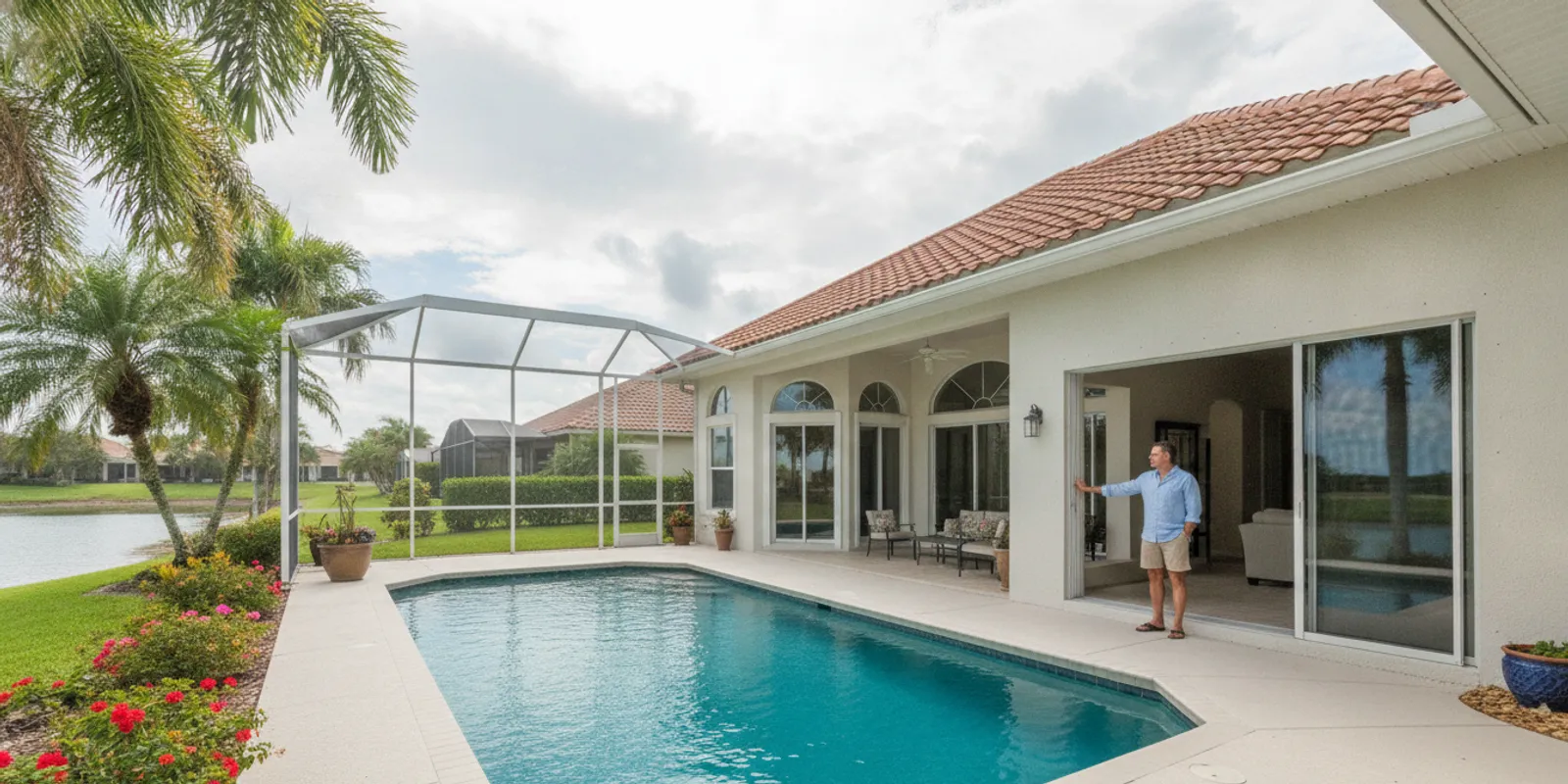
What does worth it mean for your home?
There is no single answer for every homeowner. For one household, value may mean a clear plan for the largest glass openings. For another, it may mean a system that is manageable to operate, works with daily access, and addresses the openings the household is most concerned about. Some owners want a project that covers many openings together. Others need to set priorities and consider work in stages.
Start by defining what you want the project to accomplish. Are you focused on a lanai, large sliders, or windows that are difficult to reach? Do you want to reduce the amount of preparation required before a storm? Is the home occupied year-round, or is it sometimes empty? These questions do not choose a product by themselves, but they help make the tradeoffs clearer.
Separate everyday benefits from storm-protection claims. A screen that helps with sun, insects, privacy, or outdoor comfort is not automatically an approved hurricane barrier. Decorative shutters are not automatically storm-rated either. Ask what the exact product and configuration are approved to do for a particular opening, and what conditions must be met for the approval to apply.
Sun and Storm Systems is a quote-led, measured-installation business. A free consultation and on-site measurement can help identify possible systems and details that need checking. The quote is specific to the openings and selected configuration, not a universal whole-home price.
Which openings should you list first?
Before deciding what to protect first, make a complete opening inventory. Walk through the home and note each exterior window, sliding glass door, hinged exterior door, and any lanai or patio opening you want considered. Include the room and approximate location. Do not rely on memory; a room-by-room list makes omissions easier to notice.
For each opening, add a few practical observations. Is it used every day? Is it difficult to reach or prepare? Is it unusually wide or shaped? Is there an existing shutter, screen, or panel whose product details you do not know? You do not need to measure it or select a product. A note such as “wide slider to lanai” or “side door used daily” is enough to guide the discussion.
- Room and use: Note whether the opening serves a bedroom, living area, kitchen, lanai, or other space.
- Type and approximate shape: A wide slider and a small window can present different design questions. Leave exact dimensions to the on-site visit.
- Access: Flag openings that are hard to reach, awkward to cover, or used frequently.
- Existing system: Record any product name, label, manual, approval document, or operating concern you know about.
- Household priority: Write why you want the opening considered, rather than assigning an unsupported risk score.
This list is a planning aid, not an engineering assessment. It does not establish design pressure, approval, installation method, or whether existing equipment can be reused. Those details need to be verified for the opening and proposed configuration.
Turn the walk-through into a useful inventory
Use a consistent format so the notes remain useful when you compare recommendations. Give each opening a short label, such as “living room west slider” or “front bedroom window,” and keep the same label on any photos. Then add one sentence describing what makes it important. “We use this door several times a day” is more helpful than simply marking it “high risk,” because it explains the household concern without pretending to make a technical assessment.
When a room has several windows, list them individually rather than writing “bedroom windows.” They may differ in size, frame, access, or surrounding construction. The inventory is not a substitute for measurements, but an individual list makes it easier to see which openings were examined, which were quoted, and which still need follow-up. If two openings appear similar, let the person measuring confirm whether their conditions are actually alike.
Should you start with the largest openings?
Large openings are often a useful place to begin the conversation because they may call for different choices than a typical window. A broad slider, wide lanai opening, or unusual shape can have different dimensions, supporting surfaces, and operating needs. Do not assume that a product suitable for one window can simply be scaled up to cover a larger opening.
Large glass areas may also matter in everyday use. A slider may be central to how you enter the lanai or bring light into a room. If a system is difficult for the household to operate, it may not be a practical fit even if it appears suitable on paper. Ask how the actual product moves, how it is secured or stored, and what routine operation involves.
Still, “largest first” is not a universal rule. The appropriate solution depends on construction, location, intended use, product approval, and installation conditions. A measurement visit can help determine what needs further review. Compare a large opening with other priorities before deciding whether it belongs in the current scope or a later phase.
Compare size with use, not just appearance
A large opening attracts attention, but the inventory should capture why it matters to your household. A rarely used wide opening may create different planning questions from a smaller door used throughout the day. Consider whether the opening connects indoor and outdoor living areas, whether furniture or a walkway limits access, and whether a proposed system would affect the way the room functions. These are practical questions for comparing options, not a way to predict storm performance.
Bring any concern about an unusual span or shape to the measurement visit. Avoid taking a rough tape measurement and treating it as a product limit. The person preparing the proposal needs to assess the actual opening and surrounding conditions. If a broad opening requires a different configuration from nearby windows, have the proposal make that distinction clear rather than grouping everything under a general label.
How should doors and everyday access affect the plan?
Exterior doors deserve their own line in the inventory. A front entry, side door, or door to a patio may need to remain convenient for daily use. Consider who uses it, how often it opens, and whether the proposed protection must be deployed or removed before access. Ask how the system operates and what must be done before a storm instead of assuming all systems work alike.
Do not decide based only on the number of doors. Size, frame, surrounding construction, and selected product all matter. If a door has a screen, track, nearby trim, or another feature that could affect installation, point it out during the site visit. Evaluate convenience and protection documentation as separate questions: easy operation alone does not prove that a system is approved for storm protection.
Map routes through the home
Think about the routes people actually use. A side entrance may be the everyday path for carrying groceries, while a front door may be used less often but still need to remain accessible. A patio slider may be part of the routine for meals, pets, or access to outdoor seating. Write down these patterns before you compare products. They can help you ask specific questions about deployment, storage, controls, and whether a protected opening remains convenient when the system is in its normal position.
Also consider household members who may need to operate the system. If more than one person will prepare the home, ask whether the steps are straightforward for each of them and what tasks require advance planning. Do not assume that a motor or a particular shutter style eliminates all preparation. Confirm the actual operating instructions for the option being proposed, and decide whether the procedure fits the household’s routine.
Does the storm-facing side always come first?
Some homeowners have a side of the home they are especially concerned about because of its exposure, layout, or past experience. Flag those openings for review, but do not treat a homeowner’s description of a “storm-facing side” as a substitute for an opening-by-opening assessment. Wind direction and conditions vary, and a compass direction does not establish a product’s required design pressure or approval.
Explain why you are concerned about particular openings. The professional measuring the home can review size, location, construction, and applicable requirements. Ask whether the exact proposed system is approved for that opening and installed within the approval’s tested sizes, design pressures, and anchoring requirements. Include the rest of the home in your inventory so the decision about a first phase is deliberate rather than an oversight.
Use exposure as a question, not a rating
If a wall seems more exposed, note what you observe: an open yard, a corner location, a lack of nearby buildings, or a concern based on the home’s layout. Avoid converting that impression into a numerical risk score or assuming a direction automatically calls for a particular product. It is useful context for the site visit, but the product selection still depends on the opening and applicable requirements.
When asking about this concern, request a clear explanation of what information is used to assess the opening. If the recommendation differs from what you expected, ask what aspect of size, construction, approval, or installation led to it. An opening-specific explanation is more useful than a broad statement that one side of every home should always be handled first.
What should you know about lanai and patio openings?
A lanai can be central to daily life in Southwest Florida, so it may be high on a homeowner’s list. Describe the conditions you hope to manage. You may want greater everyday comfort while also asking about an approved storm-protection function. Keep those goals distinct because screen systems can serve different purposes.
MagnaTrack hurricane screens are a specific product category. Sun and Storm Systems describes them as helping keep out wind, rain, dirt, pollen, and insects, adding privacy, and giving homeowners a way to manage lanai comfort, with screens lowered for storm protection. The exact product, opening, installation, and approval still need to be confirmed for the proposed project. Do not infer that every screen or opening size offers the same performance.
Ordinary solar or insect screens are not interchangeable with hurricane screens. If your main goal is daily shade or insect control, say so. If storm protection is also a goal, ask how the specified model’s approval applies to your particular opening. Consider who will operate it, whether a control is convenient, what preparation is expected, and how the space is used when the screen is raised or lowered. For more background, see how hurricane screens and shutters differ and the discussion of Progressive MagnaTrack screens for a patio or lanai.
Write down the lanai’s everyday job
Before comparing options, describe how you use the space across an ordinary week. Do you eat there, relax with family, or use it as an extension of the living area? Are glare, insects, privacy, or changing comfort concerns part of the decision? This helps distinguish an everyday outdoor-living goal from a storm-protection requirement. One product might address more than one purpose, but only the exact product and approved configuration can establish what it is intended to do.
Think through the position of the screen during normal use and what changes when it is lowered. Ask about the operating method, the location of controls if applicable, and the expected steps before a storm. If the lanai has multiple sides or differently sized spans, list them separately. Do not assume one screen configuration covers every side or that a product suitable for one span automatically applies to the next.
How should windows fit into a staged plan?
Review windows room by room after noting doors and large openings. You may want to focus on windows serving bedrooms, rooms used often, or openings that are difficult to prepare. Those are household priorities, not universal technical rules about which windows face the greatest risk. A site visit can help determine whether a product can be used for a specific window and how it would be installed.
Windows can differ in size, shape, frame, surrounding materials, and access. A system that might fit one window may not be appropriate for another. Ask the estimator to identify variations that change the recommendation instead of assuming one selection applies throughout the house. If you are deciding what to include first, group windows by a clear reason: room use, access, current protection, or household preference.
Group windows without losing the details
Grouping can make a project easier to discuss, but keep each opening identifiable. For example, you might note that two bedroom windows are difficult to reach while another is easy to access. The shared concern can explain your priority, but the measurements and proposal should still identify each opening. A group label should not conceal differences in dimensions, frames, or installation conditions.
If a window is partly hidden by a planting bed, a roofline, or another feature, note it rather than trying to reach it to measure. Mention whether the room is occupied frequently and whether the window is near a daily route. These observations help the consultation focus on your needs while leaving product suitability and access assessment to the site review.
How should everyday routine and operation matter?
Think about how the home is used throughout the year. A homeowner who lives there full time may have different day-to-day priorities from someone who is away for part of the year. Neither situation dictates a particular product. It does affect which operation questions are important. If the home is sometimes unoccupied, ask what preparation is needed before leaving and what tasks may be required before a storm. Do not assume that a motorized system removes every preparation step or that every product can be left in the same position.
For a home occupied year-round, consider how a system affects normal use of doors, windows, and outdoor spaces. Ask to hear an explanation of the operating method for the product being proposed. If it has a control, ask where it is located and what the homeowner is expected to do. If more than one person uses the home, include them in the conversation where possible. Ease of use is a practical factor; it does not replace product approvals, measurement, or installation requirements.
Appearance may matter, especially when a system will be visible from the street or used around a lanai every day. Note whether you hope to preserve a view, coordinate with the home, or keep a particular route convenient. Compare finishes and styles only after confirming which options meet the requirements for the opening. Appearance alone does not establish storm-protection suitability.
Consider preparation when someone is away
If the home is seasonally occupied or will sometimes be empty, make a practical list of who will be responsible for operating the system and when. Is a neighbor or family member expected to help? Would the product require access to a control, a key, or stored components? Ask the installer to explain only the steps that apply to the proposed system; the answer may differ from one product to another. This planning does not guarantee a particular outcome, but it can reveal whether the proposed routine is realistic for your household.
Ask what should happen if the person who normally prepares the home is unavailable. This is a useful household-planning question, not a reason to assume that one product is always preferable. Make sure the instructions are clear to the people who may need to use the system, and keep any documentation where they can find it. Do not rely on memory or a general description of how a similar product works.
How can you compare openings without guessing?
Use a simple priority worksheet. Rank each opening by how much it matters to your household, how difficult it is to prepare, and whether you have a specific concern about its location or use. These are discussion prompts, not a mathematical risk score. Avoid assigning a percentage or calculating a “safe” number of openings.
- High household priority: The opening serves a space you use often or is central to daily routines.
- Challenging operation: You are concerned about reaching, handling, or preparing it.
- Distinct configuration: It is unusually wide, tall, shaped, or integrated into a lanai.
- Existing-system question: You do not know the product, condition, approval, or anchoring details.
- Project planning: It may be helpful to consider the opening with nearby openings or as part of a defined phase.
Bring the worksheet and, if useful, photos to the consultation. Photos can explain a feature, but they cannot replace on-site measurement or establish that a product fits. Tell the estimator what you hope to solve first, what you may consider later, and which parts of the home need further review.
A sample way to rank priorities
Imagine a household with a frequently used lanai slider, a side entry used for daily errands, several bedroom windows, and an older shutter whose paperwork is missing. Rather than immediately choosing the largest item, the household could mark the slider as important because it connects the living room and lanai, the side entry as important because it is used often, and the older shutter as an item requiring identification. The bedrooms could be grouped for discussion while remaining listed individually.
This is not a recommendation that the slider, door, or undocumented shutter must come first. It shows how to separate reasons: daily use, unusual configuration, and uncertainty about existing equipment. The measurement visit can then identify which options are available and what approvals or installation details apply. If the household has a limited first-phase scope, the written proposal should state exactly which openings it includes so that no one mistakes a partial project for a whole-home plan.
Use a repeatable note-taking method
A practical worksheet can have five columns: opening label, room or location, everyday use, concern or question, and possible phase. Leave product selection and technical approval blank until the consultation. For example, “kitchen side door; used daily; ask how operation affects access; phase undecided” is specific enough to start a conversation. The same format can be used for all openings, which makes it easier to compare priorities without claiming that one score measures storm risk.
Keep the list current as you receive answers. Mark questions as answered only when you understand the information and know which opening it applies to. If an answer is general, ask whether it applies to every opening or only the one discussed. This small distinction can prevent confusion when a home has several types of windows and doors.
What are the differences among common protection types?
The first decision is not necessarily to choose among every product available. It is to identify the function you need for each opening and confirm which options are suitable. This overview is a starting point for a conversation, not a product specification or approval determination.
- Hurricane shutters: This broad family can include roll-down, accordion, Bahama, and Colonial styles. Operation, appearance, storage, and deployment differ. Decorative shutters are not automatically storm-rated.
- Hurricane screens: A storm-protection screen may be considered for an appropriate opening, including some lanai applications. Confirm the exact model, tested limits, design pressures, anchoring, and installation details. Do not confuse it with an ordinary solar or insect screen.
- Clear panels: These are distinct from shutters and screens. Handling, storage, visibility, and opening-specific requirements may affect whether they suit your household.
- Solar or insect screens: These can serve everyday comfort needs, but they are not automatically hurricane protection. Verify the product’s purpose before treating it as part of a storm plan.
For more background, read about clear hurricane panels and shutters and roll-down and accordion shutters. These comparisons can help you prepare questions, but do not establish that one system works for every opening.
Match the comparison to the opening
Compare product categories only after describing the opening and your priorities. A shutter, screen, or panel may differ in how it is deployed, where components are stored, how it affects visibility, and what preparation it requires. Those differences can matter to daily use, but they do not prove that a product is approved for a particular opening. Confirm the specified product, model, opening dimensions, and installation conditions before treating an option as suitable.
For example, a homeowner may want to maintain an open view during ordinary use while still asking about storm protection. That preference is relevant to comparing configurations, but it does not mean a clear panel or screen is appropriate for every opening. Another household may value a system that is readily accessible for preparation. Ask how the actual option works rather than relying on a category name that might cover several products.
What should be verified before choosing a product?
Ask for the exact product name and configuration. “Hurricane protection” is not enough detail to compare proposals or determine whether a system is appropriate for a particular opening. Product approvals and installation conditions can set limits. A system must be designed and installed within the applicable approval’s tested sizes, design pressures, and anchoring requirements.
During the consultation, ask which opening each quoted product is intended to cover; what approval and configuration apply; whether size, shape, frame, substrate, or anchoring conditions affect eligibility; and what installation, permit, or other approval details need checking. Also ask how the system is operated, deployed, stored, and maintained, and what remains unresolved in the written scope.
Do not treat a product name or general rating statement as proof that every opening qualifies. Ask how documentation applies to the actual dimensions and installation. If an answer is unclear, request that the proposal identify what must be verified before work proceeds. See what to ask when hiring a contractor for hurricane protection in Florida.
Read the scope opening by opening
When a proposal arrives, match its list to your inventory. Check that each included opening has a clear description and that the product and configuration are identified. Note any openings marked as excluded, pending further review, or dependent on a separate approval. If the estimate groups multiple openings together, ask whether the same system and installation conditions apply to all of them.
Keep a written record of unresolved questions. For instance, you may need clarification about an existing frame, the mounting surface, or a permit requirement. Do not assume a detail is settled because it was discussed verbally; ask how it will be reflected in the scope or what information is still needed. A clear record supports a fair comparison between proposals and makes the boundary of a first phase easier to understand.
How should existing shutters or screens affect your priorities?
If some openings already have shutters, screens, or panels, include them in the inventory. Note what you know: product name, installation date if documented, labels or paperwork, and whether the system appears to operate as expected. Keep manuals or approval documents available for the site visit.
Do not assume an existing system is suitable merely because it was installed previously or looks similar to a current product. Condition, original approval, opening dimensions, anchoring, and installation may matter. Ask whether the equipment can be identified and whether inspection or further documentation is needed. A homeowner’s visual check cannot establish approval or performance.
An opening with an unknown system may need assessment before you decide whether it is already addressed, needs repair, or belongs in a new scope. A documented, functioning system may help focus the estimate discussion elsewhere, subject to verification. Do not assume any system can be repaired, reused, or combined with new products without a qualified review.
Gather records without making a technical judgment
Look for manuals, product labels, permits, prior proposals, or installation paperwork if they are readily available. Photograph a label or visible feature if that helps explain what you found, but do not remove parts or climb to inspect a system. Note whether a shutter is difficult to move or whether a panel is missing, and let the professional assess the condition and documentation.
Keep uncertainty visible in your notes. “Unknown model, paperwork not found” is more useful than assuming an old system is approved or declaring it unusable. The consultation can determine what additional information is needed. Until that review, avoid counting an unidentified system as equivalent to a newly specified and documented product.
Can you protect the home in stages?
Doing a project in phases can be a useful way to organize priorities, but describe each phase precisely. List openings included in the initial scope, openings not included, and questions to revisit later. Do not assume that completing one section means the whole home is protected or that a later phase can use the same product without a new review.
Ask how the first phase fits with a longer-term plan. Can the selected system be installed independently at the openings? Are there coordination issues if other openings are addressed later? Does the proposal name the openings and configurations covered? For example, you might first evaluate a lanai and a frequently used exterior door while documenting windows for later review. That is a way to structure discussion, not a recommended sequence for every home.
Review the complete inventory so omissions are deliberate. Keep measurement notes and proposals together. When revisiting the project, confirm that the product, approval, and conditions remain applicable instead of assuming an earlier estimate settles every question.
Define a phase boundary before comparing quotes
A phase is easiest to understand when it has a written boundary. Make a list of the openings included now and identify those outside the scope. If there are unresolved conditions, note whether the proposal is pending verification rather than treating it as a final recommendation. This helps avoid a common misunderstanding: a proposal for selected doors or windows does not mean every other opening has been evaluated or addressed.
Consider whether the phase is based on a household priority, a product’s suitability for the openings, or a practical project sequence. Those are different reasons and can coexist. Ask whether selecting one group now affects decisions about the remaining openings, and whether a later measurement or approval review will be needed. Do not assume that a future phase can simply copy the earlier configuration, because openings and installation conditions may differ.
After the first phase, keep the inventory and the written scope together. Record what was installed and which questions remain open. If you return to planning later, ask that the new proposal identify the next openings and verify the applicable product and installation requirements. This preserves a clear record without implying that a partial project provides complete coverage for the home.
How should you compare a project proposal?
A useful proposal makes clear what is being considered for each opening. Check that the opening list, product descriptions, configuration, operation, and installation scope are specific. Ask for clarification if a general phrase covers several different openings. You should be able to see what is included, excluded, and still subject to verification.
Compare proposals on comparable scope. If one includes a large slider and several windows while another lists only windows, the totals describe different projects. Two products described with the same broad label may also differ in configuration or use. Ask each contractor to identify the system proposed for every opening and explain scope differences. For context on factors that can affect a quote, see the guide to hurricane-shutter quote factors; this article focuses on priority, not a fixed price.
Make a side-by-side checklist
Rather than comparing only the bottom line, put the proposals beside each other and ask whether they describe the same openings. Check the product category and configuration for each one, the operating method, and any installation or approval items that remain to be confirmed. Ask whether a line item refers to a specific opening or a group, and whether any exclusions affect your original priority list.
If one proposal includes a system for the lanai and another does not, ask for an explanation before deciding which is the better fit. If one lists an unresolved frame condition, note that the scope may be conditional. This is not an invitation to choose the most elaborate option; it is a way to understand what each proposal actually covers. A like-for-like comparison is possible only when the scope and assumptions are clear.
Do not treat a difference in total cost as proof that a product is better or that an opening is more important. Scope, number of openings, configuration, and installation conditions can differ. This article does not provide a price benchmark. The useful next step is to ask for clarification so you understand what is included and how the recommendation relates to your stated priorities.
Does adding protection guarantee lower insurance premiums?
Do not assume an automatic premium reduction. Eligibility, discounts, and documentation depend on the insurer and specific circumstances. Before counting possible savings toward the value of a project, ask your insurance company what documentation it requires for the exact system and installation.
No system should be presented as a universal waterproof seal or a guarantee that water will never enter. Ask what the selected product is designed and approved to do, which installation requirements apply, and what it does not address. One opening product does not necessarily resolve every possible source of water entry.
What should you ask during an on-site consultation?
Bring your inventory and explain how you ranked the openings. You do not need to arrive with a product decision. Ask questions that connect household priorities to the actual home:
- Which openings need a separate review or different product?
- What options are appropriate for the large sliders, doors, or lanai openings?
- What exact model and approval apply to each recommendation?
- What dimensions, frame conditions, or anchoring requirements matter?
- What would daily operation and storm preparation involve?
- Are any proposed screens for comfort only, or are they specified storm-protection products?
- Which openings are included in a first phase, and which remain outside the scope?
- What permits or other approvals need confirmation before installation?
- What is included in the written estimate, and what information is pending?
Take notes and ask for unfamiliar terms to be explained plainly. If you compare options, request that the same openings be listed in each proposal. That makes it easier to understand whether differences reflect product choice, scope, or an unresolved condition.
Questions to ask when the recommendation surprises you
If the suggested first opening is not the one you expected, ask what factors shaped the recommendation. Is the issue a dimension, an existing frame, a supporting surface, approval limits, or another installation condition? Ask which parts are confirmed and which require follow-up. This keeps the conversation focused on verifiable details without assuming that your initial ranking was wrong or that the first suggestion is automatically the only option.
If a requested product is not proposed for a particular opening, ask whether another configuration could be considered or whether the opening needs more information. A clear explanation should connect the product to the opening rather than rely on a category name. You can then decide whether to revise the phase, seek clarification, or leave that opening outside the current scope until the issue is resolved.
How can you prepare for a first project phase?
- Walk through the home. List the windows, doors, and lanai features you want considered.
- Mark priorities. Note why each opening matters, such as daily access, room use, or difficulty preparing it.
- Photograph unusual features. Photos can help explain a shape or nearby feature, but do not replace measurement.
- Gather existing product information. Keep available manuals, labels, or installation records. Do not assume existing equipment meets current requirements.
- Separate present and future scope. Write down what you want considered now and what may come later.
- Request an opening-specific proposal. Check that the written estimate names the product and scope for each opening.
This preparation does not replace professional measurement, product-approval review, or confirmation of permits and installation requirements. Sun and Storm Systems offers a free in-home consultation and measurement. Confirm current project coverage when you contact the company.
Bring the right information, not a finished answer
You do not need to arrive with a chosen product or a final ranking. The most useful preparation is a complete list, brief notes about use and access, and any available documents for existing systems. If you have photos, label them so each corresponds to an opening on the inventory. This helps the discussion stay organized while keeping the final assessment tied to an on-site review.
Before the visit, decide what you want to leave understanding. You might want to know which openings appear suitable for the options discussed, what must still be verified, and how a first phase would be described. Writing these questions down can make the meeting more productive, especially if the home has many openings or several people will be involved in the decision.
After the visit, review the proposal against your notes rather than relying on memory. Check that the proposed scope includes the openings you intended to discuss. If an opening is missing or a priority has changed, request an explanation or revision before comparing totals. Keep approval and installation questions visible until they are answered.
So, are hurricane shutters worth it?
They may be worth considering when the system fits your openings, priorities, and ability to operate it, and when the proposed product and installation meet applicable requirements. The decision is not simply about counting windows or choosing the most visible product. It is about matching a verified system to each opening and being clear about what the scope does and does not cover.
If you are not ready to plan every opening, begin with a complete inventory and rank the openings that matter most to your household. Give particular attention to wide sliders, frequently used doors, lanai openings, and windows that raise access or use questions—but treat that as a conversation starter, not a universal order. Ask for an on-site review before choosing a product or setting a project phase.
Request a free in-home measurement and estimate
A measured, opening-by-opening plan can help you compare options calmly, understand each system’s limits, and decide what makes sense for your home.